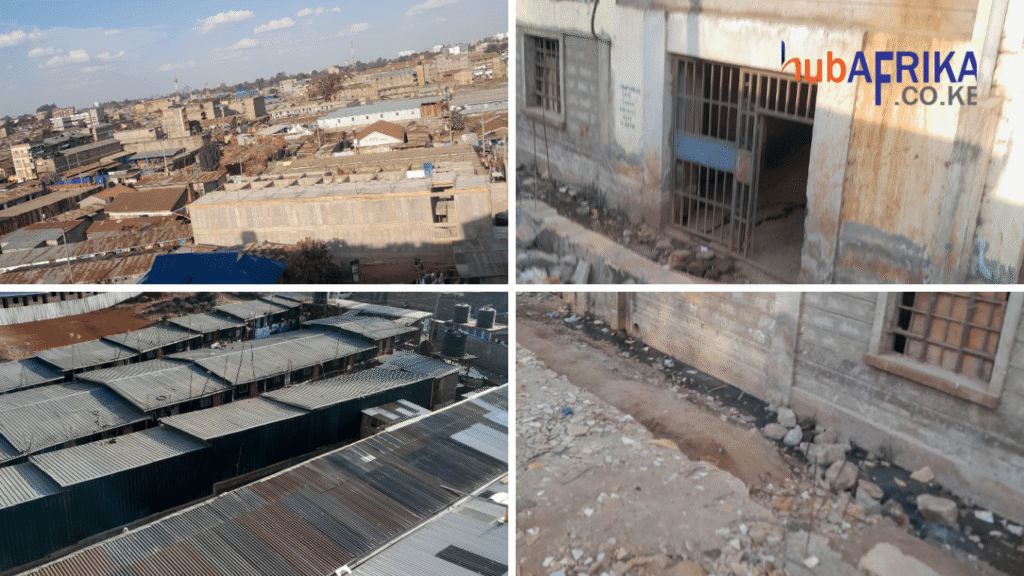
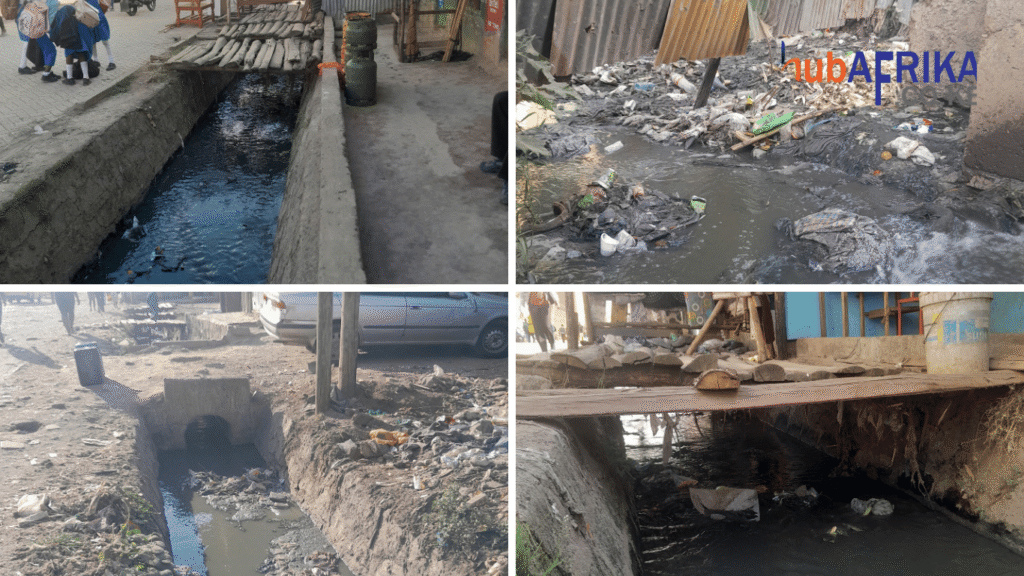

“My name is Collins Ondocho, and I’m 28. I live and work right here in Kawangware, around Stage 2. Together with my wife, we’re raising our three-year-old son. While my main job is riding a boda boda during the day, family expenses prompted me to set up a small stall for my wife near this sewage drainage line. She sells fish, omena, and other seafood starting at 4:00 PM every evening. Once her shift begins, I wrap up my boda boda work so I can come over and help her run the business.”
This is a place where ordinary people struggle to make a living. Residents like Collins and many others rely on these daily hustle activities just to feed their families. But at what cost? Is an environment right beside an open sewer line truly safe for him, his family, and the customers who buy their food?
“As for me, I’m Everlyne, but around here, almost everyone knows me as Mama Omena. I actually like the name since it’s the main brand I use for my business. I source all my fish and omena directly from Lake Victoria in Kisumu, so the quality is genuinely good. Still, given our surroundings, my biggest fear is that I might eventually lose all my customers.
She runs the business with support from her husband, yet she remains haunted by the fear of losing her entire customer base. But what is driving this anxiety? Hubafrika.co. ke’s climate investigation followed the couple to uncover the source of her fears and expose the severe environmental crisis threatening the residents of Kawangware.
“I constantly tell my wife not to serve us the food she sells at the stall. It’s not that her fish is bad, but selling in this kind of environment every single day just gives off bad vibes.
The food is giving bad vibes,” Collins claims. But what does he actually mean by that? Is it simply a matter of taste, or is his phrase hinting at a hidden environmental danger right at their doorstep?
She chuckles. “Huh, my husband is just like that. He always tells me, ‘Hizo chakula zako ni chafu’ [That food of yours is dirty], but what choice do I have? The place where I sell isn’t clean, but I’m powerless to change it. Dust settles everywhere, open sewage streams right past us… I can’t do anything about it. I’m just an ordinary person from upcountry trying to earn a living in the city”
The reality is now undeniable: an unhygienic environment, open sewage, and hazardous conditions for everyday traders. But is the local government to blame for this neglect? We put that question directly to a prominent Nairobi County environment official known for overseeing sanitation initiatives.
Nairobi County’s Response to Sewage, Floods, and Environmental Crisis
In a phone call interview with Hubafrika.co.ke, Nairobi County Environment Officer hit on shared responsibility.
“I acknowledge that managing waste and keeping the city clean is ultimately the government’s responsibility. But let’s be honest: the government doesn’t generate this garbage; the public does. We, as citizens, create the waste we see every day. Before we rush to blame the government, we need to take a step back and ask: what are we doing on our part?”
We are caught in a classic blame game between policymakers and the public. On one hand, small-scale traders like Collins and his wife feel abandoned, believing the government has failed to provide a clean, safe, and dignified environment for their livelihoods.
“Bro, mimi nakushow ukweli, hii life ya hapa ni noma. Msee, sazi gava inadai El Niño inacome, but sincerely unaona sisi tukitoboa ukweli? Juu mauchafu zainatupwa hapa ni zingine mwechche.“
[Bro, I’m telling you the truth, life here is tough. Man, right now the government claims El Niño is coming, but honestly, do you see us surviving, truthfully? Because the amount of garbage dumped here is just crazy.]
Enter Rukundo, one of Kawangware’s local traders selling mahamri moto [hot Swahili fried bread]. Though he hails from Burundi, the vibrant rhythm of Nairobi flows through him. He hustles throughout the day selling his hot pastries, yet he remains deeply frustrated by the unhygienic conditions surrounding his business.
“The smell here is horrible. I make and sell mahamri, but the stench in this area completely ruins my appetite. Open sewage runs past my stall, and waste is dumped all over. With the heavy rains coming, my biggest fear is what happens next. Where am I going to sell, and will my income just wash away? This environment is truly hostile to small traders.”
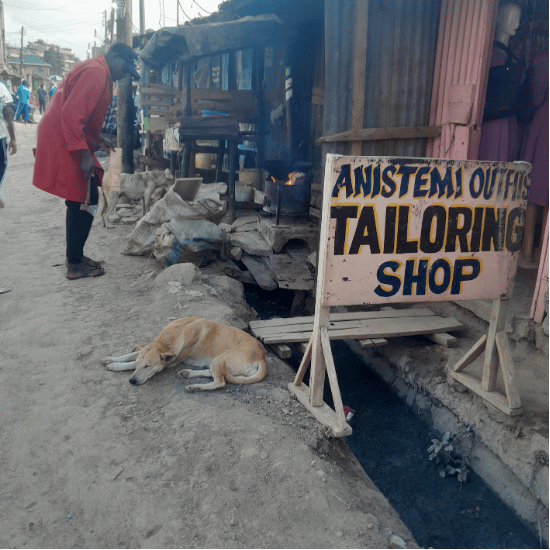
According to reports published on Hubafrika.co.ke, the Kenyan government received a substantial allocation to mitigate the devastating effects of the El Niño rains.
Official reports published on Hubafrika.co.ke confirm that Kenya has secured KSh 51.8 billion in World Bank emergency funding designated for El Niño disaster mitigation and regional epidemic response.
Prime Cabinet Minister Musalia Mudavadi on state resource mobilization:
“These resources provide the necessary buffer for our economy and infrastructure as we navigate the adverse effects of heavy rains and public health threats.”
Deputy President Kithure Kindiki on emergency deployment:
“Our primary focus remains saving lives, rebuilding destroyed drainage systems, and supporting small business owners affected by these disaster events.”
Despite official assurances and massive disaster response funding, people like Collins and Rukundo see no relief on the ground. They remain disillusioned, battling daily environmental hazards. But who bears the ultimate responsibility?
For Collins, the consequences of working in an unhygienic environment have hit home in the most painful way possible—affecting his three-year-old son.
“I told my wife that the fish we sell here is contaminated,” Collins reveals. “My son has been hospitalized several times with severe diarrhea, specifically during the periods when his mother cooks this food for him at home.”
The crisis has escalated beyond lost earnings; it is now directly threatening the health of young children, extending the harsh impacts of urban environmental degradation to Kawangware’s youngest residents.
Everlyne admits the moral dilemma she faces every day as a mother and a vendor:
“If I am not confident enough to serve the food I sell to my own family, how can I comfortably sell it to others? They say charity begins at home. I know the conditions under which we operate are terrible, but what choice do we have? We have to keep pushing to survive.”
In a phone call interview with Hubafrika.co.ke, an official framed the issue as a shared responsibility:
“For those speaking to Hubafrika.co.ke, I want them to understand that, yes, we can blame the government—and the government deserves to be held accountable. But we must also tell the public: you need to publish this and let everyone know that while the government is not performing as it should, accountability must be a two-way street.”
This ongoing debate over citizen action versus state duty inspired a lively AI-generated podcast produced by Hubafrika.co.ke on YouTube, where two virtual personas debated who should truly take the fall for Nairobi’s public health nightmare.
Meanwhile, when asked about climate adaptation strategies in informal settlements during a press conference, Nairobi Governor Johnson Sakaja pointed out to political enemies rather than accountability.Yet, this endless back-and-forth leaves residents trapped in a continuous loop of blame.
“It is a shame that some leaders in this city are finger-pointing and leveraging this tragedy for political gain. We should stop politicising natural calamities and instead focus on a collective response to support those affected in Nairobi and across the country.”
Self-Reliance Amidst Sanitation and Government Response Failure
For some traders, waiting for official intervention is no longer an option. Joseph Guru, a local entrepreneur who sells cooking gas and electronic gadgets, operates a shop positioned directly above an open drainage trench. His approach to surviving the sanitation crisis relies entirely on self-funded adaptation:
“But tuseme tu ukweli, environment ni kazi yetu wote. Mimi nimetaka kuhama hii place mara nyingi juu maji inajaa kwa hizi mitaro, lakini niliamua instead ya kuhama, wacha nijenge mbao ziko juu before duka yangu so that maji ikijaa, hii sewage haifiki ndani ya duka.”
[“But let’s just speak the truth, the environment is everyone’s responsibility. I have wanted to move away from this place many times because water fills these drainage trenches, but I decided that instead of moving, let me build raised wooden planks in front of my shop so that when it floods, this sewage doesn’t reach inside the shop.”]
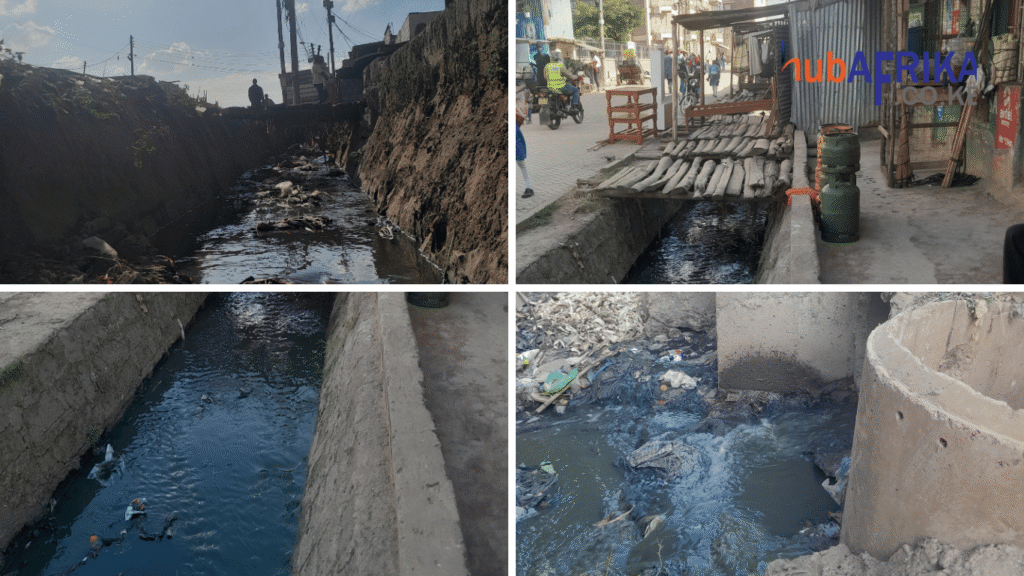
Yet, even as traders adapt, behavioral challenges persist. While conducting this investigation, our reporting team observed a local resident dumping wastewater directly into the same blocked drainage channel others were complaining about.
With polluted rivers emitting foul odors, local youth losing their livelihoods, and national warnings of impending El Niño floods, Nairobi’s urban environmental crisis remains far from resolved.
Climate Displacement in Informal Housing and the Effect of Children
The environmental crisis also shapes how families live and seek shelter. Twelve-year-old Jennifer, a pupil at Restoration Education Center, shares her family’s struggle with extreme weather:
“My name is Jennifer. I am 12 years old. I go to school here at Restoration Education Center, and I live at Ebenezer Gardens. We relocated here because our former house used to get flooded inside whenever it rained. Ebenezer Gardens is slightly elevated, so even when heavy rains come, water does not flood our house. It is one of the few safe buildings here in Kawangware.”
To understand why some structures withstand flooding while others submerge, Hubafrika.co.ke interviewed Mr. Njuguna, the landlord of Ebenezer Gardens, about his construction approach in an area notorious for spatial congestion:
“Huh, there is nothing special really,” Mr. Njuguna explains. “We constructed this building just like anyone else. In Kawangware, proper architectural planning is difficult because space is tight and buildings are squeezed together. During construction, I simply instructed the contractor to elevate the entrance area to block floodwaters from entering the ground floor. That is how we have managed to prevent indoor flooding.”

Unanswered Questions and Strategic Solutions
Nairobi’s urban planning framework remains deeply flawed. In high-density settlements like Kawangware and Kibra, residents face a double threat: chronic exposure to raw sewage and garbage, combined with severe flood hazards during heavy rains.
If individual landlords rely on informal, self-taught solutions to prevent flooding, it raises a fundamental regulatory question: Who is approving structural plans and authorizing building construction in Nairobi’s informal settlements?
Hubafrika.co.ke reached out to the Ministry of Lands, Public Works, Housing and Urban Development to clarify building approval procedures and safety compliance in Kawangware. However, as of the time of publication, the Ministry had not responded to our calls or written inquiries.
The reality remains stark: silence from the Ministry of Lands, blame deflected onto the public by environmental officials, and daily suffering endured by residents on the ground.
- Will young entrepreneurs continue losing their hard-earned livelihoods to preventable environmental hazards?
- Will children continue falling ill from consuming food sold in contaminated spaces?
- Must families remain trapped in a cycle of displacement every time heavy rains strike due to poor urban infrastructure?
To address these systemic challenges, the Center for Media Innovation Hub, in partnership with Hubafrika.co.ke and Restoration Education Center, is launching a practical media training program for local youth focused on climate accountability, environmental journalism, and community behavioral change.
Real change requires collective action: someone must own the crisis, accept responsibility, and take measurable steps toward a clean, safe, and sustainable environment for all.