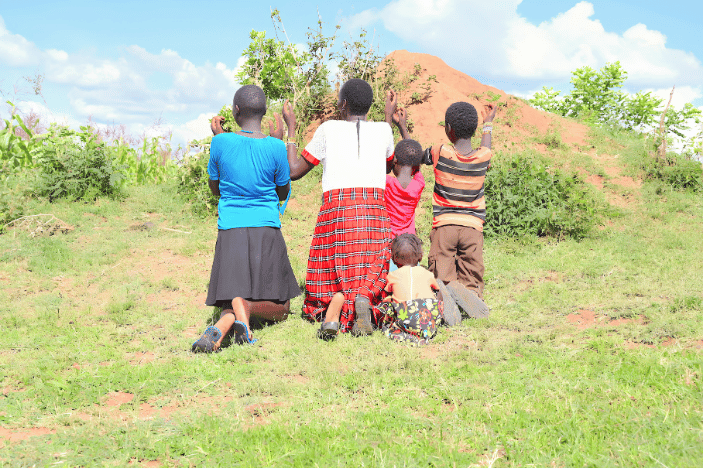


The National Gender and Equality Commission (NGEC) has raised a national alarm over the rising child marriage crisis, revealing that approximately 3.9 million girls and women in Kenya were married before reaching their 18th birthday.
During the commemoration of the International Day of the Girl Child under the 2026 theme “End Child Marriage and Invest in Girls’ Rights,” on Sunday, October 11, 2026, the Commission called for state interventions to curb harmful cultural practices that continue to affect the health, education, and economic aspects of millions of young girls across the country.
“Child marriage violates children’s rights and perpetuates gender inequality. ” NGEC highlited.
“It compromises girls’ health and safety, interrupts their education, and limits their future economic opportunities,” the Commission stated, emphasizing that global estimates by UNICEF point to 12 million girls under 18 being married every year.

Child Marriage Data in Kenya and the 3 Counties Leading in Crisis
According to NGEC data, Tana River County leads the country with a 43 percent child marriage prevalence rate, followed by Marsabit at 40 percent and Samburu at 37 percent.
In other counties of West Pokot, Mandera, Wajir, and Narok, child marriage is recorded to be ranging between 28 percent and 36 percent.
Also Read
Parents To Be Fined Ksh 100K for Failing to Enroll Children in School
In the coastal region, counties such as Kwale and Kilifi face compounded threats of early marriage, high school dropout rates, and teenage pregnancies.
In Western and Nyanza counties of Homa Bay and Migori, child marriage is driven by poverty and orphanhood, often masked under informal cohabitation arrangements that evade official legal scrutiny and law enforcement intervention.
NGEC data show that rural areas record a 16 percent prevalence rate compared to 9 percent in urban centers, while 29 percent of women in the poorest households face early marriage compared to just 6 percent in the wealthiest families.
In urban and peri-urban counties such as Nairobi, Kiambu, and Nakuru, where average rates appear to be lower at around 9 percent, the number of affected girls remains alarmingly high due to dense informal settlement populations.
The report further highlighted that early marriage connects with teenage pregnancy, which currently stands at 15 percent nationally, alongside severe economic barriers, where 29 percent of women in the poorest households face child marriage compared to just 6 percent in the wealthiest households.
NGEC emphasized that protecting girls is grounded in Articles 27, 28, and 53 of the Constitution of Kenya 2010, as well as the Marriage Act 2014 and the Children Act 2022, which outlaw minor unions and harmful practices.