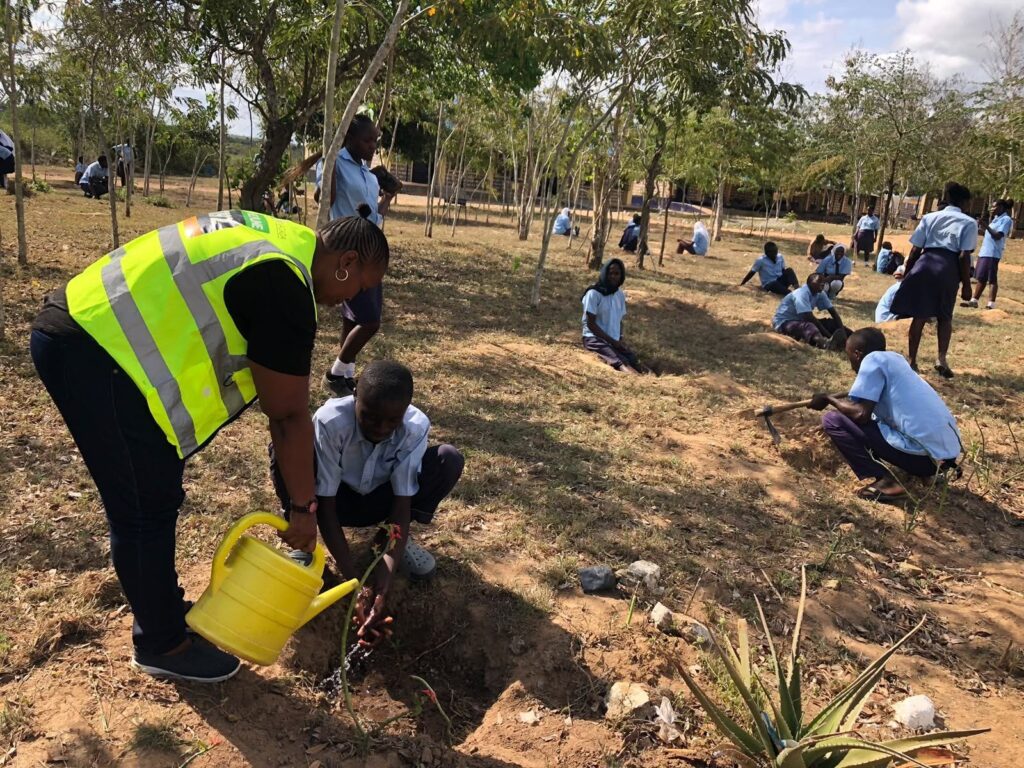
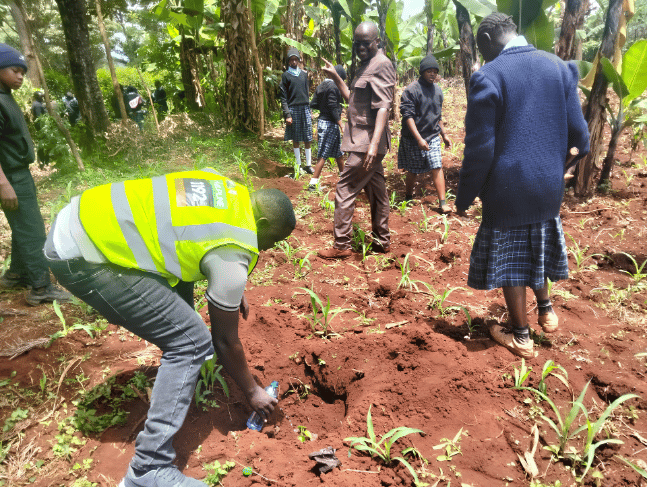

Following ongoing national calls for climate restoration, Kirinyaga learners joined officers from the National Authority for the Campaign Against Alcohol and Drug Abuse (NACADA)to green their school grounds with native tree seedlings.
Raimu Comprehensive Primary School pupils, alongside anti-substance abuse officers, planted 330 trees on their campus grounds.
Speaking to learners during the greening exercise, anti-substance abuse officers emphasized that building healthy, supportive school environments goes hand in hand with youth mentorship and holistic character development.
“Our commitment to safeguarding the youth extends beyond drug prevention to creating sustainable, healthy learning spaces. Every tree planted here today represents a greener, more resilient future for our children.” NACADA Representative
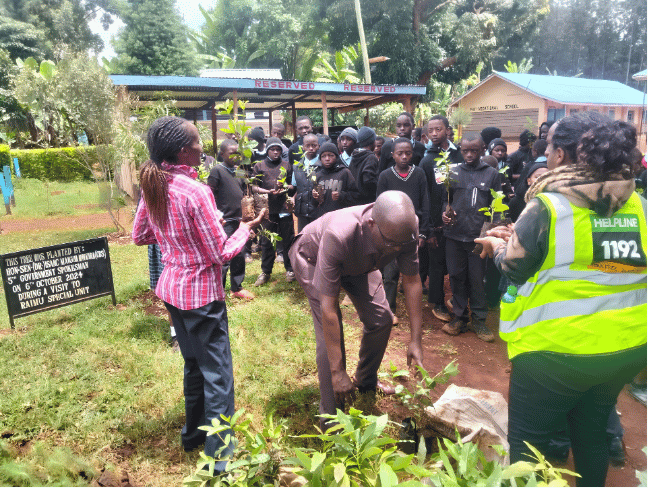
To ensure long-term environmental benefits, the school selected indigenous, shade-bearing species with deep root systems that help bind the campus topsoil and provide shade from harsh sunlight.
How NACADA, Kirinyaga Pupils Tree Planting Helps Curb Environmental Degradation in Mount Kenya Region
Decades of agricultural expansion across the Mount Kenya region have stripped away native tree canopies, making school-led initiatives vital for restoring lost local biodiversity.
Also Read
Why Nyeri Residents Planted Thousands of Trees on Mazingira Day
How Kawangware’s Youth Are Responding to a Changing Climate
How to Survive El Niño Rains Scheduled to Hit Nairobi This October
The deep root systems of newly planted indigenous seedlings anchor fragile topsoil, preventing valuable farm nutrients from washing away during heavy downpours on sloping terrain.
Planted campus trees serve as natural barriers against surface runoff, curbing the severe soil erosion that frequently damages unprotected grounds across Kirinyaga County.
Establishing dense clusters of trees around school compounds creates cooler micro-climates that lower local temperatures, retain soil moisture, and shield the area from intense heat.
Because the Mount Kenya ecosystem acts as a primary water tower, planting trees ensures rainwater steadily recharges underground aquifers rather than being lost to flood runoff.
Fast-growing native species act as essential windbreaks, shielding school infrastructure and neighboring smallholder farms from strong, destructive seasonal winds.
Teaching pupils practical nursery care creates a ripple effect, inspiring farming families to adopt agroforestry practices that preserve long-term soil health on their private lands.
By actively involving young learners today, as NACADA is doing, it builds a resilient generation of environmental stewards equipped to reverse climate-driven land degradation across the country.