
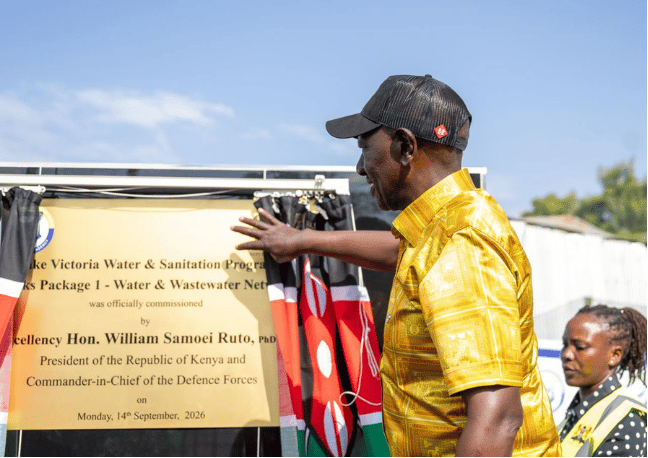

Kenya’s blue economy programme is advancing into four major Lake Victoria pier projects as the government invests Ksh. 9.5 billion. The initiative is stepping up efforts to improve water transport infrastructure, expand commercial fishing, and strengthen regional economic growth around the lake.
Speaking during a press address in Kisumu on Monday, September 14, 2026, President William Ruto said the government had completed the pier project in Homa Bay to improve infrastructure and support larger vessels operating on Lake Victoria.
“We are investing KSh9.5 billion to strengthen blue economy activities along Lake Victoria, consequently creating jobs and improving livelihoods for residents of the lake region,” President William Ruto said.
“This is an important step in expanding maritime infrastructure and unlocking new opportunities in fishing, transport, and regional trade,” he added.
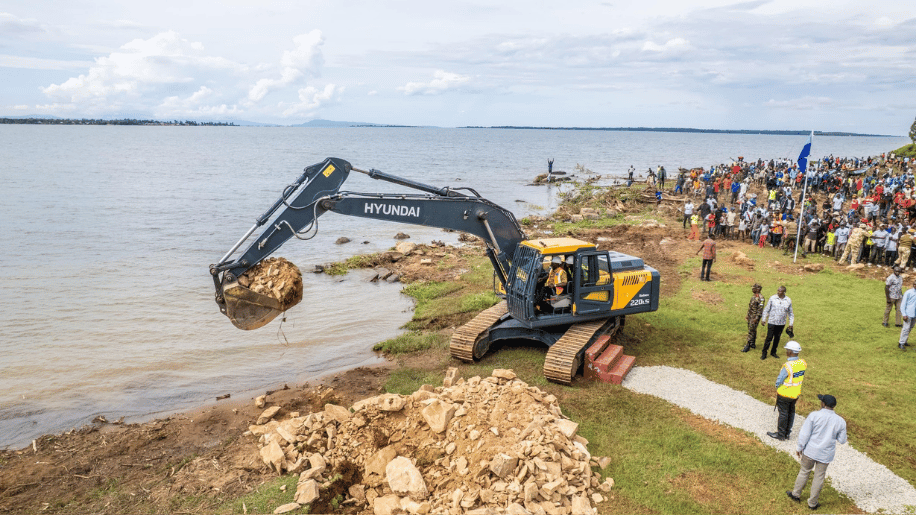
pier infrastructure along the shores of Lake Victoria. Ramogi on X
President Ruto said three additional pier projects are currently under development in Usenge, Muhuru Bay and Busia. Once completed, the projects will bring the total number of government-supported piers to four, creating improved Kenya’s Blue Economy Programme infrastructure for vessels operating on Lake Victoria.
“We have completed the pier in Homa Bay, and we are building another at Muhuru Bay in Migori.” President Ruto said.
The development is expected to strengthen water transport and create better opportunities for trade, fishing and other economic activities around the lake.
The investment in pier infrastructure is also part of broader government efforts to unlock the economic potential of Lake Victoria and improve connectivity among communities that depend on the lake for their livelihoods.
Beyond pier construction, the government is focusing on direct economic interventions to boost fisherfolk livelihoods across the country.
Expanding Kenya’s Blue Economy Programme Across Coastal and Lake Regions
According to President William Ruto, a core priority of Kenya’s blue economy programme is attracting private investors to establish modern fish processing plants, while empowering local fishermen through structured cooperative grants.
Under this framework, the government creates policy incentives for private sector processors while organizing fishermen into Beach Management Units (BMUs) and SACCO cooperatives.
To build capacity, the state is supplying these groups with direct local grants including free fish cages, fingerlings, and initial stock feed to ensure local communities feed directly into the private processing supply chain.
“Our program in that sector has helped counties come together, with fishermen coming together and the fishing in these areas has started to change,” President Ruto said.
The strategic model of Kenya’s blue economy programme extends beyond Lake Victoria to Kenya’s Indian Ocean coastline counties from Kwale to Lamu. By connecting private capital with grant-supported cooperatives, the government aims to give fishermen greater bargaining power, drive local food production, and yield higher financial returns across Kenya’s maritime waters.
This nationwide expansion under this initiative focuses on establishing modern cold-chain storage facilities, upgrading artisanal landing sites, and facilitating direct trade routes between local sea fishers and international markets.
Through structured maritime SACCOs supported by Kenya’s blue economy programme, local fishing crews will gain access to commercial-grade boats and deep-sea gear to enable them to navigate deeper offshore waters.
“This is an important step in expanding maritime infrastructure and unlocking new opportunities in fishing, transport, and regional trade.” President Ruto added
By integrating coastal and inland water bodies under Kenya’s blue economy programme, the strategy seeks to reduce post-harvest losses, create thousands of sustainable jobs for youth in coastal communities, and transform traditional fishing into a commercial powerhouse.
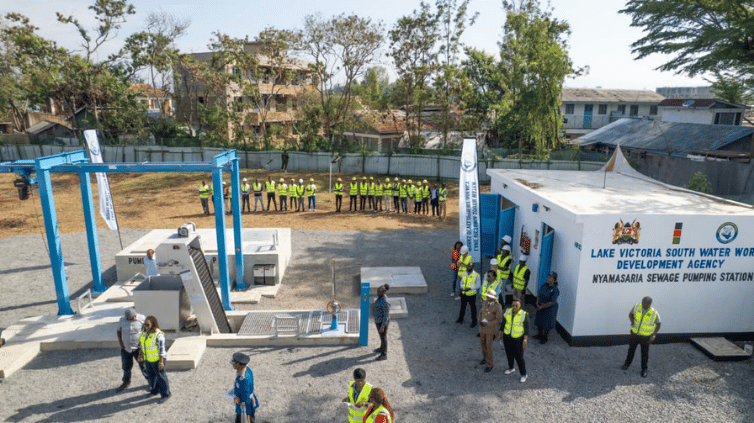
Kisumu. Photo | Mintofm on X

