


The Pharmacy and Poisons Board (PPB) has launched a nationwide health alert, warning the public and medical practitioners against a falsified eye injection medication currently in circulation within the country.
The national medicines regulatory authority issued an urgent public advisory following post-marketing surveillance activities that uncovered counterfeit batches of an essential injection used in specialized eye treatments.
According to the official communication released by the health regulator on Monday, September 28, 2026, the falsified drug presents serious risks of irreversible vision loss, severe internal eye infections, or total treatment failure for unsuspecting patients.
The regulator detected counterfeit batches of Lucentis (Ranibizumab) 0.3mg injection, specifically bearing batch numbers 18862110 and 18802112, which misleadingly claim to be manufactured by Genentech.
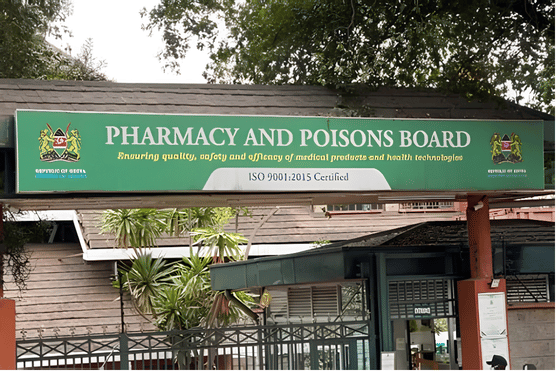
“The Board has detected a falsified Lucentis (Ranibizumab) 0.3mg injection batch numbers 18862110 and 18802112, misleadingly claiming to be manufactured by Genentech,” the official document stated.
What Is the Fake Medical Injection That PPB Has Warned Kenyan Patients About?
A forensic comparison conducted by the regulatory body against the genuine product supplied by Novartis Overseas Investment AG revealed stark physical discrepancies between the fake and authentic versions.
The board noted that while the fake product is labeled as Lucentis, the registered brand name in Kenya is Patizra, and the falsified label indicates a dosage of 0.3 mg instead of the registered 10 mg/mL.
“The product is packed in a dark amber vial, while the genuine product is packed in a clear glass vial,” the PPB highlighted, adding that the batch numbers, manufacturing dates, and expiry details fail to match genuine manufacturer records.
The regulator further warned of severe medical complications, stating that the falsified batches may contain incorrect active ingredients, harmful contaminants, or no active medicinal properties at all.
“Procuring from unlicensed sources endangers patients and constitutes a violation of the Pharmacy and Poisons Act, Cap 244 of the Laws of Kenya,” stated PPB Chief Executive Officer Ahmed I. Mohamed in the advisory.
Mohamed confirmed that investigative and enforcement agencies have already made progress, leading to the arrest of one suspect found in possession of the fake injections.
The board has directed healthcare facilities, distributors, and patients to quarantine any suspected stocks immediately and report encounters through their official reporting portal or the mobile app mPeVERS.