
EPRA fuel prices will be retained for the next 30 days. The Energy and Petroleum Regulatory Authority (EPRA) has announced its latest monthly pricing review. In its official press release covering the period from September 15, 2026, to October 14, 2026, which was shared on its official X account on Monday, September 14, 2026, the energy regulator confirmed that local retail pump prices for Super Petrol, Diesel, and Kerosene will remain unchanged.
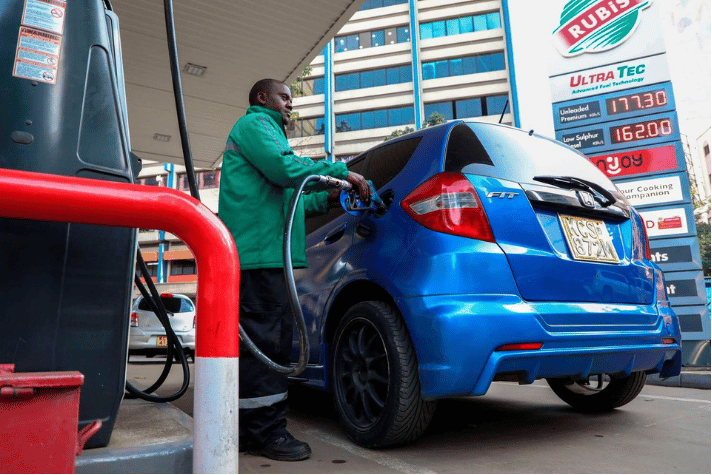
In their monthly update of the EPRA fuel prices, a litre of Super Petrol will continue retailing at Ksh214.03, while Diesel remains at Ksh217.86 and Kerosene at Ksh191.38 in a cycle that will run until October 14.
The decision to keep EPRA fuel prices static comes at a critical time for household budgets and commercial transport networks that rely on daily fuel consumption. Consumers across major urban hubs and rural agricultural zones will continue paying the existing rates at local retail stations for the next thirty days.
In Mombasa, motorists will pay Ksh210.87 per litre for petrol, Ksh214.58 for diesel, and Ksh188.09 for kerosene during the period.
In Nakuru, Super Petrol will be sold at KSh212.92 per litre, diesel at KSh217.27 and kerosene at KSh190.81.
In other parts of the country, fuel prices will remain unchanged, with petrol retailing at Ksh213.69 per litre in Eldoret and Kisumu, Ksh218.67 in Meru, Ksh213.94 in Kitale and Ksh214.77 in Kisii. Kilifi will record one of the lowest prices at Ksh211.68 per litre, while Mandera will continue to have the highest petrol price at Ksh234.68.
In accordance with Section 101(y) of the Petroleum Act 2019, alongside Legal Notice No. 192 of 2022, we have calculated the maximum retail prices of petroleum products. All local maximum retail rates factor in the mandated Value Added Tax (VAT) under the VAT Act 2013, Legal Notice No. 128 of July 14, 2026, the Finance Act 2023, the Tax Laws (Amendment) Act 2024, and revised excise duty rates adjusted for inflation as specified under Legal Notice No. 194 of 2020.
Why EPRA Fuel Prices Retained Despite Rising Global Diesel and Kerosene Import Costs
The primary objective driving the Petroleum Pricing Regulations is to cap the retail rates of petroleum products already within national borders so that importation and other prudently incurred expenses are fully recovered while ensuring reasonable prices for end consumers. By balancing the substantial cost reduction in imported Super Petrol against the price increases observed in Diesel and Kerosene imports, the regulator effectively balanced the pricing mechanism to keep EPRA fuel prices steady without exposing oil marketing companies to unrecoverable financial losses.
The foreign exchange stability maintained between the US Dollar and the Kenya Shilling over the past quarter played a pivotal role in absorbing international cost variances. Because Kenya imports all of its petroleum requirements in refined form using USD-denominated contracts, an exchange rate often amplifies global price increases. With the exchange rate remaining virtually flat near KShs 129.72 per dollar throughout July and August 2026, the regulatory formula avoided currency depreciation surcharges that typically push retail rates higher during periods of international market stress.
Public reaction to the announcement has been largely welcoming, particularly among public service vehicle (PSV) operators, long-distance freight transporters, and low-income households that depend heavily on kerosene for lighting and cooking. Transport sector stakeholders noted that maintaining current EPRA fuel prices prevents immediate fare hikes and stabilizes logistics charges across agricultural supply chains. This price lock provides essential relief to traders moving food products from rural farms to urban markets across Kenya.
Paragraph 12: Looking ahead, market analysts will closely monitor international crude movements, global refined product availability, and regional geopolitical developments as the regulatory authority prepares for its next monthly cycle on October 14, 2026. For now, the decision to maintain stable EPRA fuel prices offers businesses and households nationwide a clear financial horizon, safeguarding consumer purchasing power while maintaining statutory compliance across the country’s energy ecosystem.